
Subfloor Prep That Prevents Future Problems
Flooring Installation in Houston for concrete slab and wood frame homes requiring moisture testing and material acclimation
Flooring failure in Houston typically traces back to subfloor moisture issues or inadequate material acclimation before installation. Concrete slab homes—common throughout Jersey Village, Atascocita, and suburban developments—retain moisture that migrates upward through flooring if vapor barriers are absent or improperly installed. Wood flooring installed without acclimation to local humidity levels either gaps during dry months or buckles when seasonal moisture increases. ARE Construction & Repairs LLC installs flooring as part of full remodels and new construction projects, managing subfloor preparation, material acclimation, and finish installation across residential and commercial properties. In-house finish crews handle the work from inspection through final topcoat application without handing off to separate subcontractors.
Flooring installation begins with subfloor inspection and moisture testing using meters that measure concrete slab moisture content or wood frame moisture levels. Concrete requires moisture readings below manufacturer thresholds before hardwood or tile installation proceeds, and high readings indicate the need for vapor barrier application. Material acclimation follows manufacturer specifications—typically storing flooring on-site for several days to stabilize at ambient temperature and humidity before installation begins. Layout accounts for room geometry, traffic patterns, and transition points between materials.
Request an evaluation to assess your subfloor conditions and discuss material options suitable for your space.
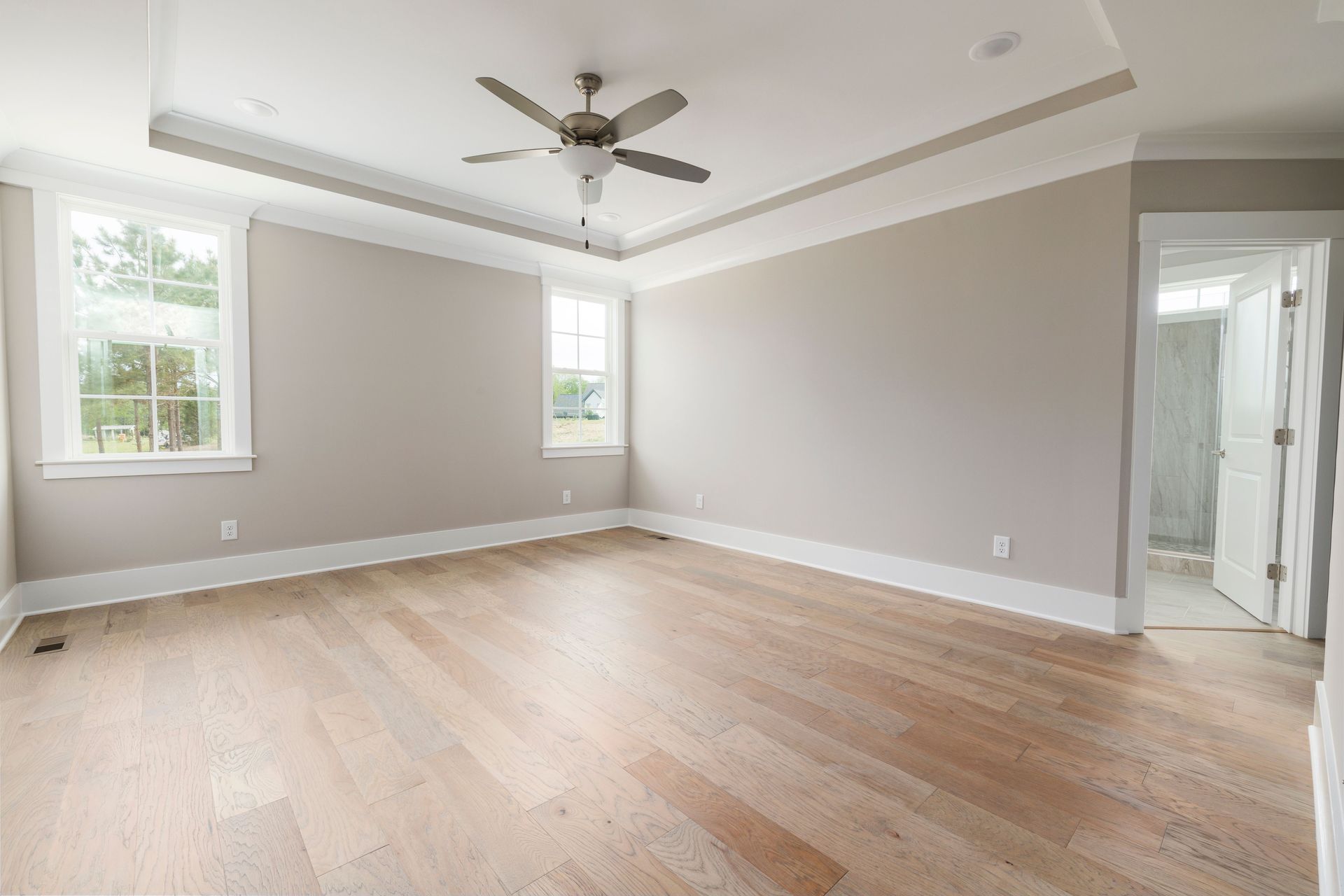
How Moisture Testing Prevents Warranty Issues
Flooring manufacturers void warranties when installation occurs over subfloors exceeding specified moisture content. Moisture trapped beneath flooring creates adhesive failure with tile, cupping and crowning with hardwood, and delamination with laminate products. Testing confirms whether vapor barriers are needed before installation proceeds, particularly in newer construction where concrete hasn't fully cured or in rooms where plumbing leaks may have introduced moisture.
After installation completes, you'll notice flooring that remains flat and stable across temperature and humidity changes, seams between planks or tiles that maintain consistent gaps, and transitions between rooms or material types that don't create tripping hazards. Sealing and finish topcoat application protects hardwood from moisture penetration and surface wear, extending the time before refinishing becomes necessary.
Installation scope includes baseboard and transition trim that covers expansion gaps required for wood flooring, which expands and contracts with seasonal humidity changes. Stone and tile installations involve grout selection based on joint width and expected foot traffic, with epoxy grouts used in commercial applications where standard cement grout would crack under heavy use.
Flooring Installation Questions
Flooring projects involve material selection, subfloor preparation, and installation methods that affect long-term performance. These answers address common concerns during planning.
What does moisture testing involve for concrete slabs?
Moisture meters measure relative humidity or calcium chloride testing quantifies moisture vapor emission rates. Readings above manufacturer limits require remediation—either allowing additional curing time or installing vapor barrier systems before flooring installation.
How long does material acclimation take?
Hardwood typically requires three to seven days stored in the installation space to stabilize at local temperature and humidity. Rushing this process causes planks to expand or contract after installation, creating gaps or buckling.
Why do expansion gaps matter around room perimeters?
Wood flooring expands with humidity and contracts when air dries. Gaps of one-half inch around walls and transitions allow movement without buckling. Baseboards cover these gaps while allowing the floor to move beneath them.
What subfloor issues prevent flooring installation?
Uneven surfaces exceeding one-quarter inch variation over ten feet cause hollow spots under flooring that lead to cracking or squeaking. Concrete requires grinding or self-leveling compound; wood subfloors need additional screws or plywood overlay to eliminate movement.
How does Houston's humidity affect flooring choices?
Solid hardwood expands and contracts more than engineered wood or tile with seasonal humidity changes. Engineered wood uses cross-laminated construction that resists movement, making it more stable in humid climates. Tile and stone remain dimensionally stable regardless of moisture fluctuations.
ARE Construction & Repairs LLC installs flooring during kitchen remodels, bathroom renovations, and new construction across Houston neighborhoods. Call (713) 894-6057 to discuss subfloor conditions and material selection for your project.