
Moisture Control That Prevents Long-Term Damage
Bathroom Remodeling in Houston for homes with outdated plumbing layouts and moisture issues in humid climate conditions
Houston's humidity creates persistent moisture in bathrooms, particularly in homes built during mid-century construction booms where ventilation standards lagged behind current code. You'll see this as peeling paint, soft drywall near tubs and showers, or mildew that returns shortly after cleaning. Modern bathroom remodels address moisture at the source through proper ventilation, moisture-resistant materials, and plumbing code compliance that prevents fixture leaks. ARE Construction & Repairs LLC remodels bathrooms from demolition through tile, custom lighting, and finish work using in-house electrical, plumbing, and finish crews. Mid-century homes in Jersey Village, Atascocita, and surrounding Houston neighborhoods often require plumbing fixture relocation and electrical upgrades during remodels to meet current use expectations.
Bathroom remodeling begins with full demolition and hazmat assessment when homes were built before 1980, as lead paint and asbestos-containing materials require specific handling protocols. Structural inspection follows to identify frame reinforcement needs, particularly around tubs and tile surrounds where water damage may have compromised studs. Plumbing rough-in relocates fixtures when layout changes are planned, manages vent stack routing for proper drainage, and installs shutoff valves at each fixture. Electrical work includes GFCI circuits at all outlets per code, dedicated circuits for high-draw ventilation fans, and custom lighting installation.
Schedule an on-site assessment to identify moisture damage and review layout options for your space.
What Proper Ventilation Prevents Over Time
Bathrooms without adequate ventilation trap moisture in walls and ceilings, creating conditions for mold growth and drywall deterioration. Ventilation fans sized correctly for room volume exchange humid air with outside air, reducing moisture levels that cause paint failure and wood rot. Fan installation includes ducting routed to exterior vents rather than terminating in attics, which transfers the moisture problem rather than solving it.
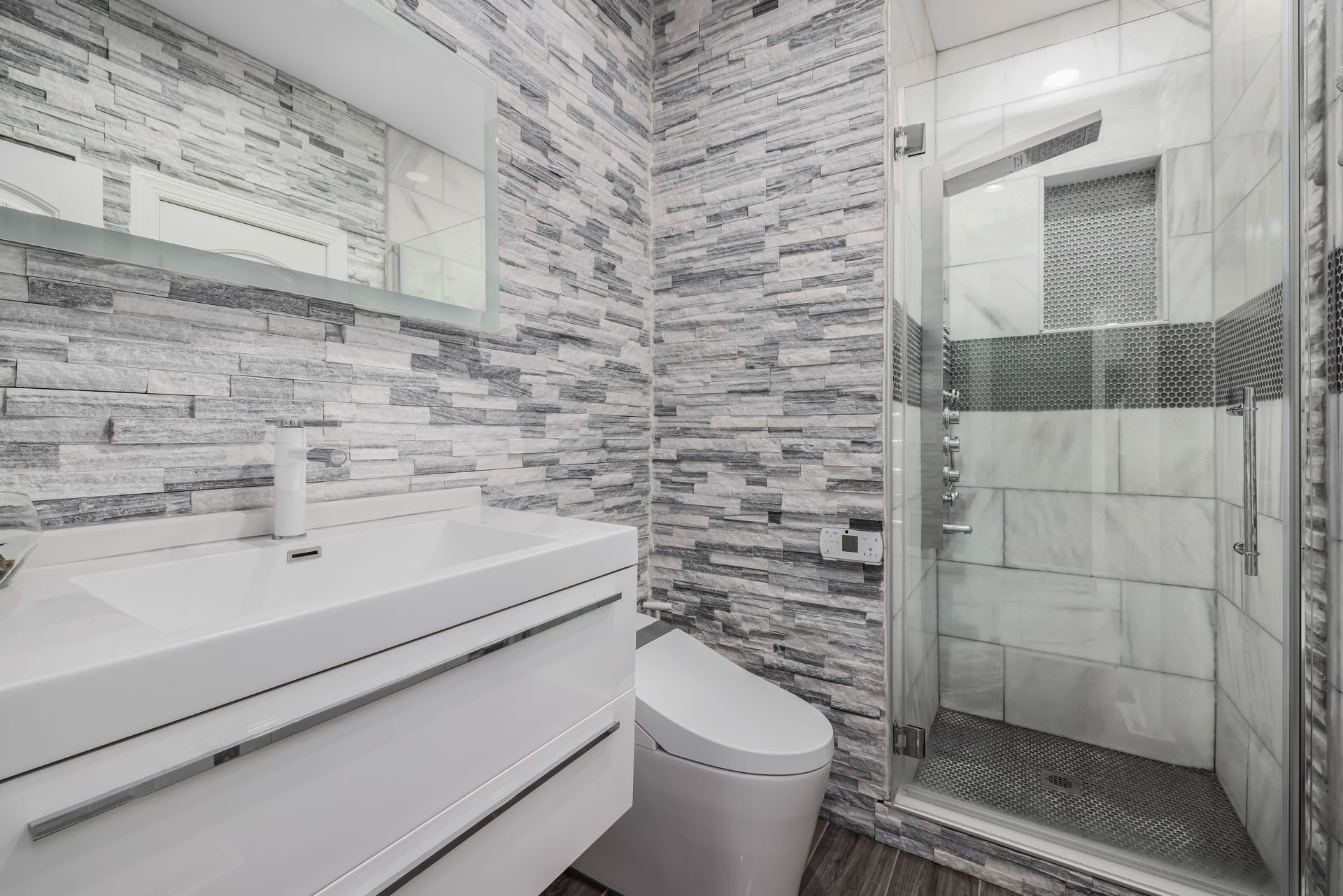
Once remodeling finishes, you'll notice fixtures that operate without drips or leaks due to proper supply line connections, tile installed with waterproof membrane backing that prevents moisture penetration, and lighting positioned to eliminate shadows at mirrors and showers. Moisture-resistant sheetrock used behind tile and in high-humidity areas resists the softening and mold growth that standard drywall experiences in these conditions.
Material selection includes tile layout patterns that minimize grout lines where maintenance issues concentrate, fixture finishes that withstand daily use without corroding, and LED lighting that produces less heat than older bulb types. Custom lighting work involves accent lighting in niches, vanity lighting at appropriate heights for task visibility, and waterproof-rated fixtures in shower areas.
Answers to Bathroom Remodeling Questions
Bathroom remodels raise specific concerns about moisture management, plumbing code compliance, and how existing conditions affect project scope. The following addresses what homeowners typically need to know.
What does hazmat assessment cover in older homes?
Homes built before 1980 may contain lead paint on trim and walls, and asbestos in flooring or joint compound. Assessment identifies these materials, which require containment and certified removal rather than standard demolition methods.
How does plumbing fixture relocation affect cost?
Moving toilets, sinks, or showers requires rerouting drain lines and vent stacks inside walls or under floors. Slab foundation homes common in Houston suburbs may need concrete cutting to access buried drain lines, adding labor and material costs compared to pier-and-beam construction.
Why do GFCI circuits matter in bathrooms?
Ground fault circuit interrupters shut off power when they detect current leakage, preventing shocks in wet environments. Current code requires GFCI protection on all bathroom outlets, and remodels bring existing circuits into compliance even if original construction predates this requirement.
What makes moisture-resistant drywall different?
Standard drywall uses paper facing that absorbs water and promotes mold growth. Moisture-resistant drywall uses fiberglass mat facing that doesn't wick moisture, maintaining structural integrity in high-humidity areas like bathrooms.
How does ventilation fan sizing get calculated?
Fan capacity measured in cubic feet per minute (CFM) should match or exceed bathroom square footage. Larger bathrooms or those with multiple fixtures require higher CFM ratings, and fans must duct to exterior vents rather than attic spaces to actually remove moisture.
ARE Construction & Repairs LLC completes bathroom remodels with licensed plumbers, electricians, and finish crews across Houston. Discuss your project scope and moisture concerns at (713) 894-6057.